

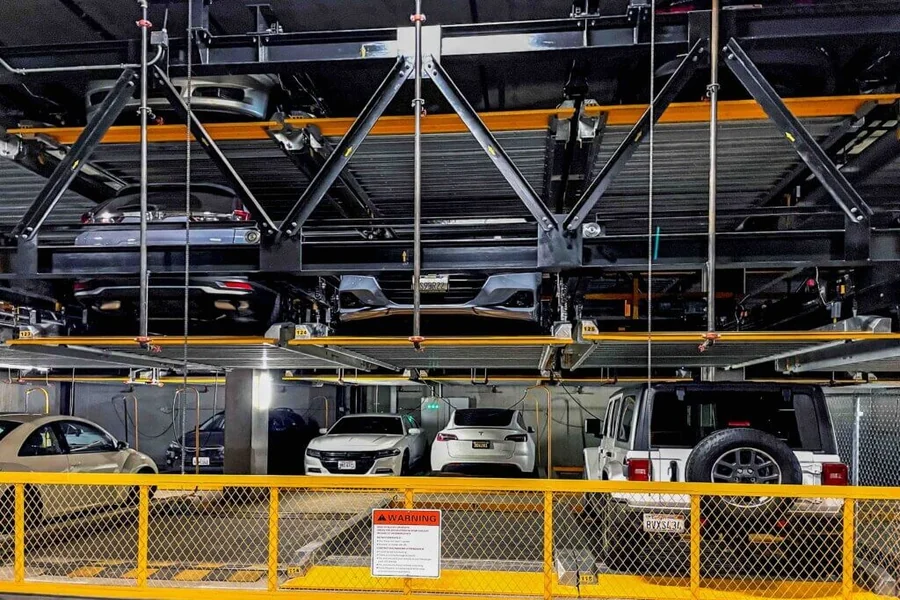
As cities around the world continue to expand, urban planners face the growing challenge of optimizing limited land space while reducing congestion and environmental impact. One groundbreaking innovation addressing these challenges is the puzzle car parking system. Also known as automated parking systems (APS), these advanced mechanisms are revolutionizing how we think about parking by maximizing efficiency, reducing the urban footprint, and seamlessly integrating with modern smart city infrastructure.
Understanding the Mechanics of Puzzle Car Parking Systems
How Do Puzzle Car Parking Systems Work?
A puzzle car parking system operates as a fully automated structure that parks and retrieves vehicles using lifts, conveyors, and mechanical shuttles. The concept is simple yet highly efficient: drivers pull into an entry bay, exit the vehicle, and let the system take over. Using a series of sensors, cameras, and control software, the system moves the car vertically and horizontally to a designated parking slot.
The name “puzzle” comes from the way vehicles are arranged, similar to sliding puzzle pieces, to make the best use of every inch of space. Unlike conventional parking lots that require large maneuvering areas, puzzle systems can stack vehicles in compact arrangements. This design enables up to twice as many cars to fit into the same footprint as a traditional parking garage.
For drivers, the experience is seamless. Once ready to leave, the system retrieves the car automatically and delivers it to the exit platform, often within minutes.
The Technology Behind Puzzle Parking: An Inside Look
The technological foundation of puzzle car parking systems lies in precision engineering and automation. Each system integrates advanced mechanical components such as elevators, conveyors, and turntables, all controlled by intelligent software that coordinates movement safely and efficiently.
Sensors continuously monitor vehicle position and movement to prevent collisions, while real-time software tracks parking availability and optimizes space allocation. Some systems even include mobile apps that allow users to reserve spots, check availability, and request retrieval remotely.
Innovative models are increasingly incorporating electric vehicle (EV) charging stations within parking bays. This integration supports eco-friendly urban initiatives and aligns with the growing demand for sustainable transportation infrastructure.
Comparing Traditional Parking Solutions with Innovative Alternatives
Traditional parking structures rely heavily on manual driving and human judgment, which leads to inefficiencies such as wasted space and longer parking times. Drivers often circle lots looking for open spots, contributing to both traffic congestion and air pollution.
In contrast, puzzle car parking systems automate the entire process, optimizing both time and space. Vehicles are parked and retrieved in a fraction of the time, eliminating the frustration of searching for a space. Additionally, because the system limits vehicle movement within the facility, it experiences less wear and tear compared to traditional garages.
From an urban planning perspective, this innovation is transformative. Cities plagued by limited real estate and increasing vehicle density can use puzzle systems to create compact, high-capacity parking solutions that preserve valuable land for housing, parks, and public spaces.
The Environmental Impacts of Puzzle Car Parking
Reducing Urban Footprint: How Puzzle Parking Contributes to Sustainability
In dense metropolitan areas, land is one of the most valuable resources. Puzzle car parking systems help minimize the land footprint dedicated to parking by utilizing vertical space instead of sprawling horizontal lots. This compact approach frees up land for other essential uses such as green spaces, public infrastructure, or housing.
Furthermore, reducing paved surfaces mitigates heat island effects and improves rainwater absorption, helping cities manage stormwater more effectively. These designs contribute to sustainable urban development by promoting smarter, more efficient land use.
The Role of Puzzle Parking in Mitigating Traffic Congestion
Traffic congestion often worsens when drivers spend excessive time searching for parking. By automating parking and retrieval, puzzle car parking systems drastically reduce the time vehicles spend idling and circling blocks. This reduction in driving time leads to lower emissions and improved fuel efficiency across urban areas.
Additionally, streamlined parking solutions can encourage sustainable commuting habits. When combined with public transit hubs or bike-sharing stations, these systems support multimodal transportation networks that reduce dependence on private vehicles.
Energy Efficiency and Space Utilization: Benefits for Cities
Energy efficiency is a key advantage of the puzzle car parking system. Once operational, it consumes minimal electricity, particularly when outfitted with energy-efficient motors and lighting. Many modern installations incorporate renewable energy technologies such as solar panels or regenerative drives that recover power from mechanical movement.
By stacking vehicles vertically, these systems enable cities to accommodate more cars within smaller structures, lowering construction costs and reducing the environmental burden of sprawling parking lots. This efficient use of space allows urban developers to redirect resources toward sustainable infrastructure improvements.
Adopting Puzzle Car Parking in Modern Urban Design
Case Studies: Cities Leading the Charge in Innovative Parking
Several major cities have already embraced automated parking systems as part of their smart infrastructure strategies. In New York City, the “Stack” system has become a model for vertical parking efficiency, particularly in high-density neighborhoods where every square foot counts.
San Francisco has also implemented automated parking structures that integrate renewable energy technologies and electric vehicle charging. These installations have not only improved parking capacity but also reduced emissions associated with traditional parking operations.
Both examples demonstrate how puzzle car parking systems can address urban congestion while aligning with sustainability goals.
Integrating Puzzle Parking into Smart City Initiatives
Smart cities thrive on data, automation, and connectivity. Puzzle car parking systems fit seamlessly into this vision. When linked with citywide mobility networks, they can share data about parking availability, optimize traffic flows, and even integrate with autonomous vehicle navigation systems.
For urban planners, these systems represent a valuable tool for achieving sustainable mobility. By collaborating with private developers and technology firms, municipalities can incorporate puzzle parking into larger transportation ecosystems that improve accessibility and efficiency.
Challenges and Solutions in Implementing Puzzle Parking Systems
Despite their advantages, puzzle car parking systems face a few challenges. The initial installation cost can be substantial, especially for large-scale projects. However, cities are increasingly exploring public-private partnerships and innovative financing models to overcome this hurdle.
Another challenge lies in public perception. Some drivers are wary of fully automated systems, fearing potential malfunctions or safety risks. Addressing these concerns through education, demonstrations, and transparent communication is essential. As adoption grows and success stories multiply, public confidence continues to strengthen.
The Future of Urban Mobility: What Lies Ahead in Parking Innovations
Predictions for the Evolution of Puzzle Car Parking Technology
As urban environments evolve, so too will puzzle car parking technology. The next generation of systems is expected to feature machine learning capabilities that predict usage patterns, anticipate peak hours, and dynamically adjust operations for maximum efficiency.
The Internet of Things (IoT) will also play a vital role in connecting vehicles, sensors, and control centers. These networks will allow for real-time data exchange, enhancing traffic management and user convenience. Future models may even communicate directly with vehicles to assign parking slots automatically and manage retrieval schedules seamlessly.
How Autonomous Vehicles Could Shape the Future of Parking
The rise of autonomous vehicles could revolutionize the puzzle car parking system even further. Self-driving cars can navigate tight spaces independently, reducing the need for human-oriented parking designs. This evolution could result in even more compact and efficient parking structures optimized for robotic movement.
Imagine a future where autonomous cars communicate directly with parking facilities, drive themselves to the nearest available spot, and return to pick up passengers when summoned. This synergy between self-driving technology and automated parking will redefine how cities handle vehicle storage and mobility.
Public Perception and Adaptation: What Do Citizens Really Think?
Public acceptance remains a vital factor in the widespread adoption of puzzle car parking systems. Although many people initially approach automation with skepticism, increased awareness and successful case studies are shifting opinions. Demonstrations that highlight safety, reliability, and convenience help build trust among citizens.
As urban areas continue to innovate, public perception is likely to evolve toward embracing technology-driven solutions that prioritize efficiency and environmental responsibility.
Final Thoughts
The puzzle car parking system stands as a beacon of innovation in the quest for smarter, more sustainable cities. By combining automation, space optimization, and environmental stewardship, it provides a blueprint for the future of urban parking. These systems not only save space but also reduce emissions, streamline traffic, and support broader smart city goals.
As technology advances and cities expand, puzzle parking will play an increasingly critical role in shaping efficient, livable, and environmentally conscious urban landscapes. It represents more than a convenience; it is a cornerstone of the next generation of urban mobility.
